
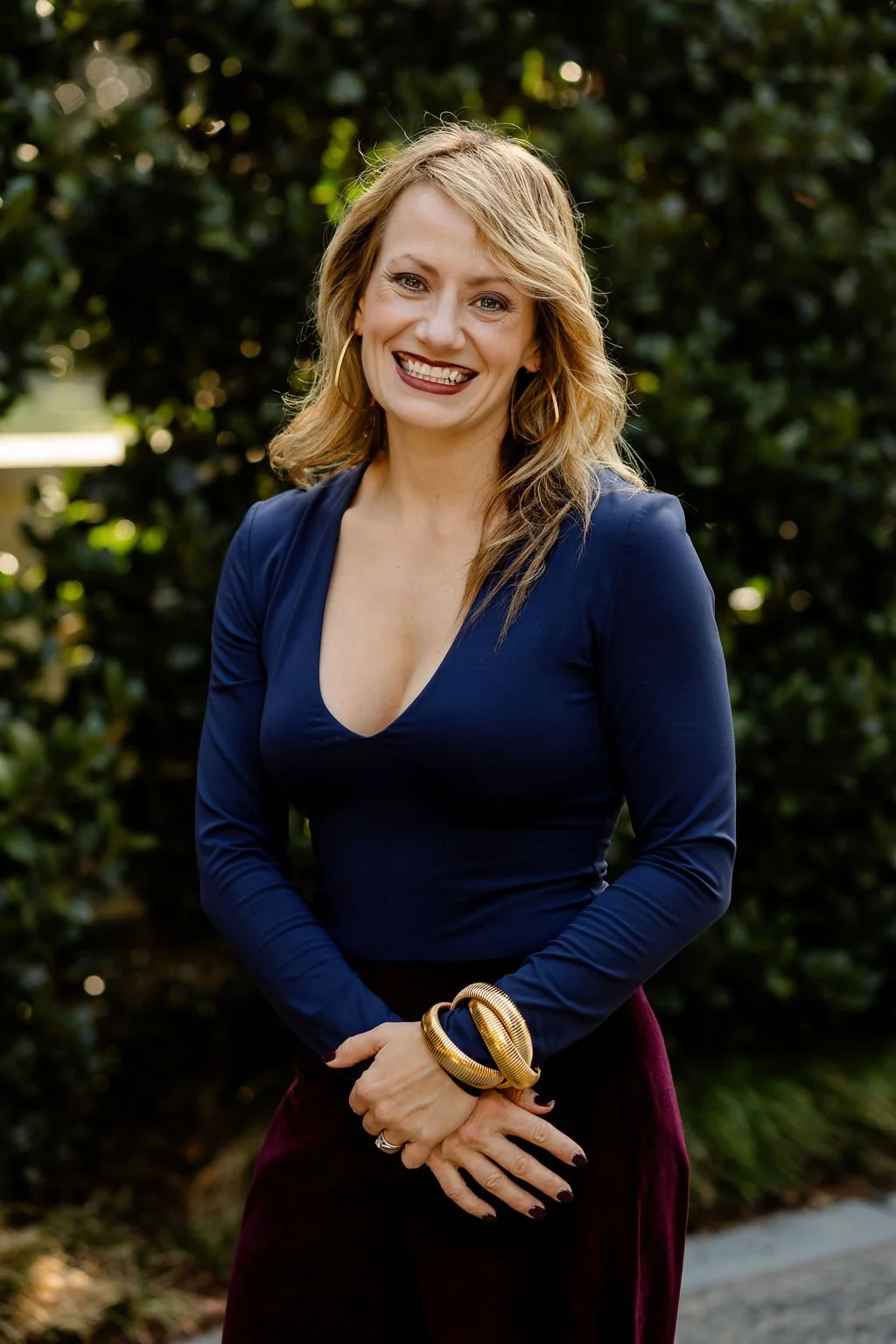
I get excited about the opportunity for change in a person’s life.
Therapy can be serious work without feeling cold or clinical. I bring warmth, honesty, curiosity, and respect for the ways you have learned to survive.
I am a Dallas native, a wife and mom, and a therapist who cares deeply about relationships, trauma recovery, and personal growth. I studied at UT Dallas and Harding University. Outside the office, I enjoy cross-training, baking, traveling, and snow skiing.
Why I became a therapist
I am drawn to the moment when a pattern begins to make sense—not as a personal failure, but as something learned in a family, relationship, culture, or season of survival. Understanding that pattern can create room for a different response. I value the courage it takes to look honestly at what hurts, and I also believe therapy should notice humor, capability, connection, and the parts of life that are already working.
My role is not to hand you a prefabricated answer. It is to listen closely, offer a clinically informed perspective, ask useful questions, and help us choose a direction together. At times that means slowing down and building stability. At other times it means practicing a difficult conversation, examining a relationship cycle, processing a traumatic memory, or translating insight into a concrete change outside the office.
Training and credentials
- Licensed Marriage and Family Therapist Supervisor (LMFT-S): training in relational and family systems, plus supervision of LMFT Associates in Texas.
- Licensed Professional Counselor Supervisor (LPC-S): counseling across a range of mental-health and life concerns, plus supervision of LPC Associates in Texas.
- EMDR Certified Therapist: advanced training and consultation in Eye Movement Desensitization and Reprocessing.
- Licensed Chemical Dependency Counselor (LCDC): specialized training related to substance-use disorders and recovery.
- Additional training: Brainspotting, DNMS, Emotionally Focused Therapy, family systems, and Gottman Method Level Two.
My approach
I see therapy as a collaboration. We begin by understanding what brings you in, the systems and relationships around you, and what you want from the work. I pay attention to both insight and lived experience: thoughts, emotions, body responses, attachment, behavior, context, and the practical changes that matter outside the therapy room.
Being trauma-informed means I do not assume that disclosure or rapid processing is always helpful. We build a shared map, discuss options, prepare carefully, and adjust the pace when needed. Being relationship-focused means we look at the patterns between people—not only the symptoms within one person.
Relational and contextual
People do not develop in isolation. We may consider family roles, attachment, culture, identity, grief, work, substance use, health, and present relationships alongside the concern that first brought you in.
Choice and transparency
I explain why I am suggesting a method, what it may involve, and what alternatives exist. You can ask questions, decline an exercise, revisit a goal, or tell me when the pace or direction does not feel right.
Insight that reaches daily life
Understanding is valuable when it helps you recognize a pattern sooner, respond with more flexibility, communicate more clearly, or make a decision that reflects your values.
Flexible, not formulaic
EMDR, Brainspotting, DNMS, family-systems work, and relationship approaches are options—not a menu that every client must complete. The plan depends on your goals, readiness, history, preferences, and clinical needs.
The working relationship matters
Research across psychotherapy approaches consistently treats the therapeutic relationship as an important part of effective care. In everyday terms, you should feel that your therapist is listening, taking your goals seriously, and willing to talk openly about misunderstandings or concerns. A good fit does not mean every session feels easy or that Kristin agrees with everything you say. It means the work can be candid without becoming shaming, and challenging without ignoring your consent or context.
The first few appointments provide time for both of us to assess fit. If another therapist, specialty, or level of care would better support you, I will say so and discuss options when possible. You can also decide that you want a different style or perspective. That is useful information, not a failure at therapy.
What you can expect from me
- A nonjudgmental space that is also honest and engaged
- Clear explanations and consent before focused interventions
- Attention to strengths, context, culture, values, and relationships
- Regular conversations about goals, fit, and what is or is not helping
- Referral to another provider or level of care when that would better support you
Areas that inform my work
My practice includes individual therapy, couples and relationship therapy, trauma treatment, attachment and family-of-origin work, anxiety, addiction recovery, intimacy concerns, and professional supervision. These concerns often overlap. You do not need to determine the correct category before contacting me; beginning with what is happening in your life is enough.
—Kristin Warren, LMFT-S, LPC-S, EMDR Certified Therapist, LCDC
Credentials and professional context
Want to know what happens next?
See the booking steps, paperwork process, and a plain-language guide to your first session.
What to expect